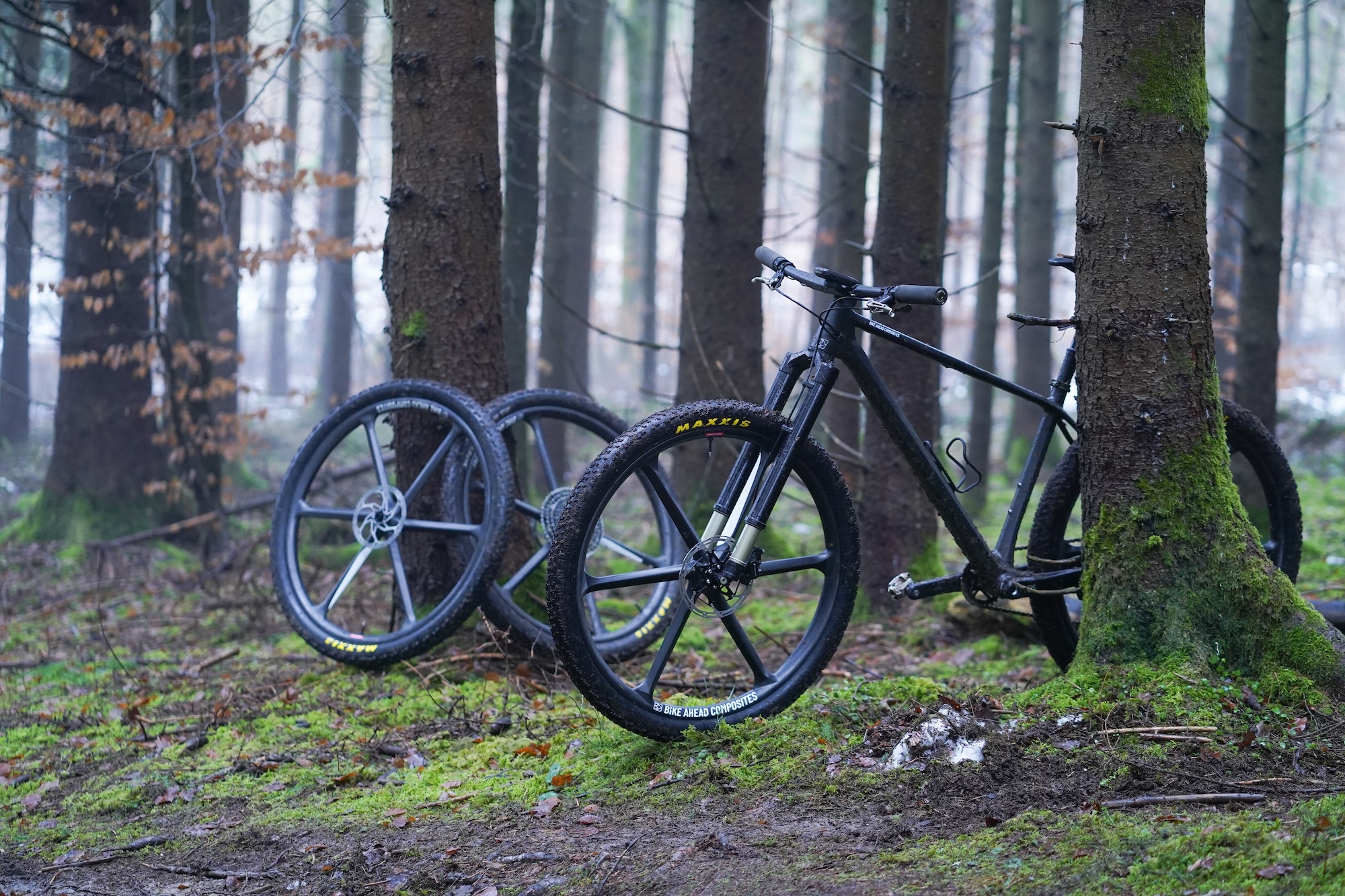
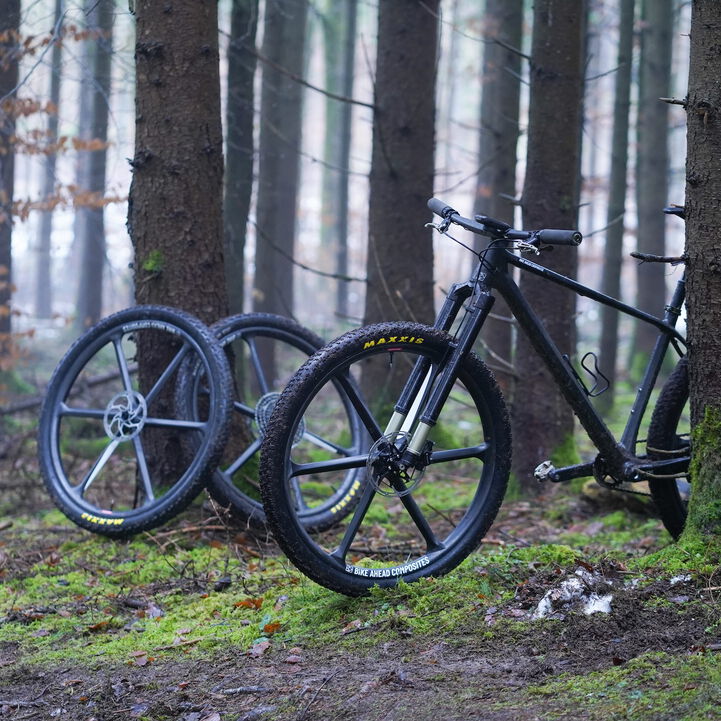
Everyone’s talking about 32-inch wheels. We wanted facts. Together with the testing experts at Ride Better Bikes, we conducted the ultimate comparison. One bike. Two wheel sizes. Acceleration test bench. Comfort measurement on the bumpy course. Race track with segment timing via light barrier. The result: exciting!
Acceleration
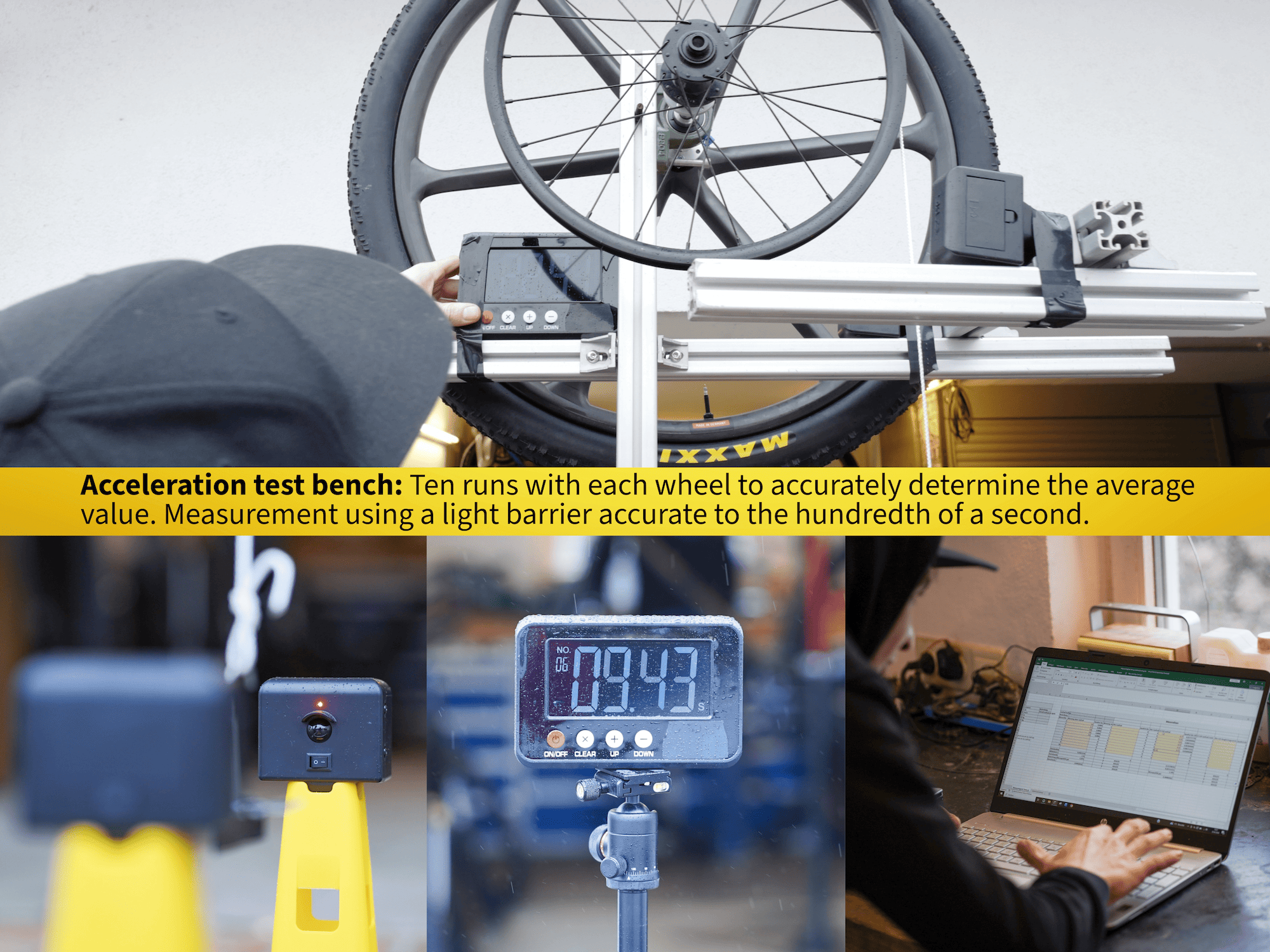
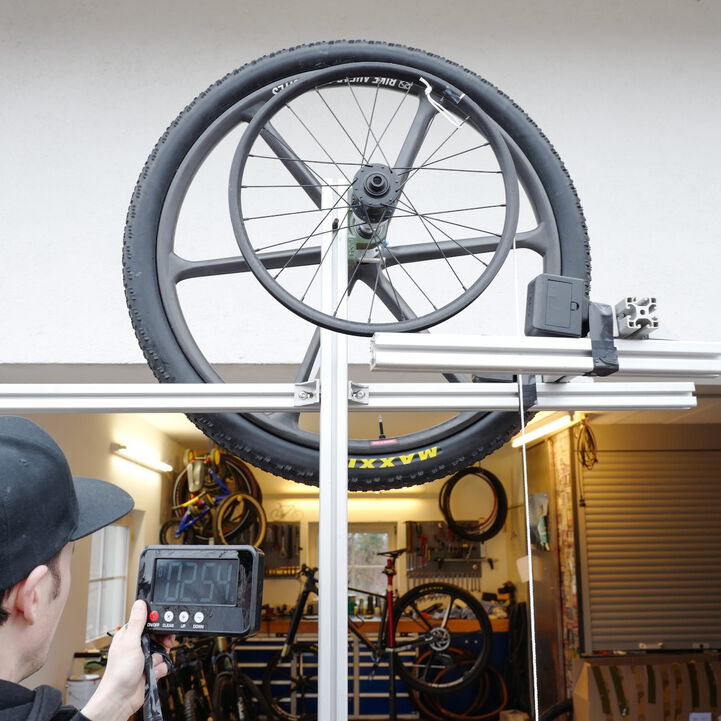
Large wheels are harder to accelerate. That’s the theory. But exactly how big is the difference? We determined that using an acceleration test bench. The result:
- The 32-inch BITURBO weighs 440 grams more than the 29-inch BITURBO when ready to ride with tires.
- A larger wheel must rotate more slowly to achieve the same speed. 32 inches requires 10 percent more rotational energy to accelerate.
- Mathematical example based on the combined weight of the bike and rider: When sprinting on a flat ground from 0 to 30 km/h with 400 watts, the 32-inch bike requires 3 watts more.
- Compared to the absolute power, 3 watts is not very relevant.
- The reason for the higher moment of inertia is not the larger circumference, but only the higher weight.
Rollover performance
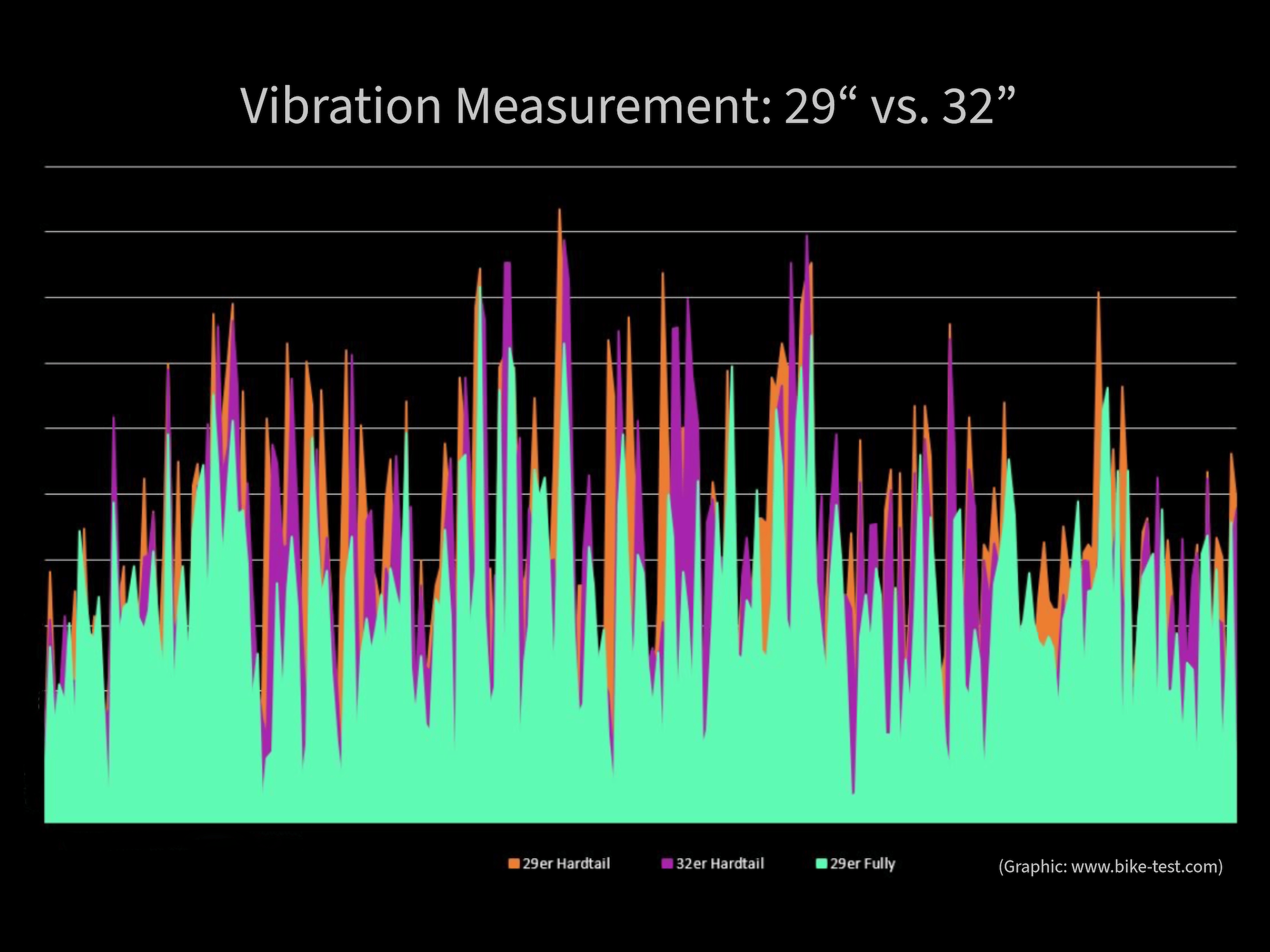
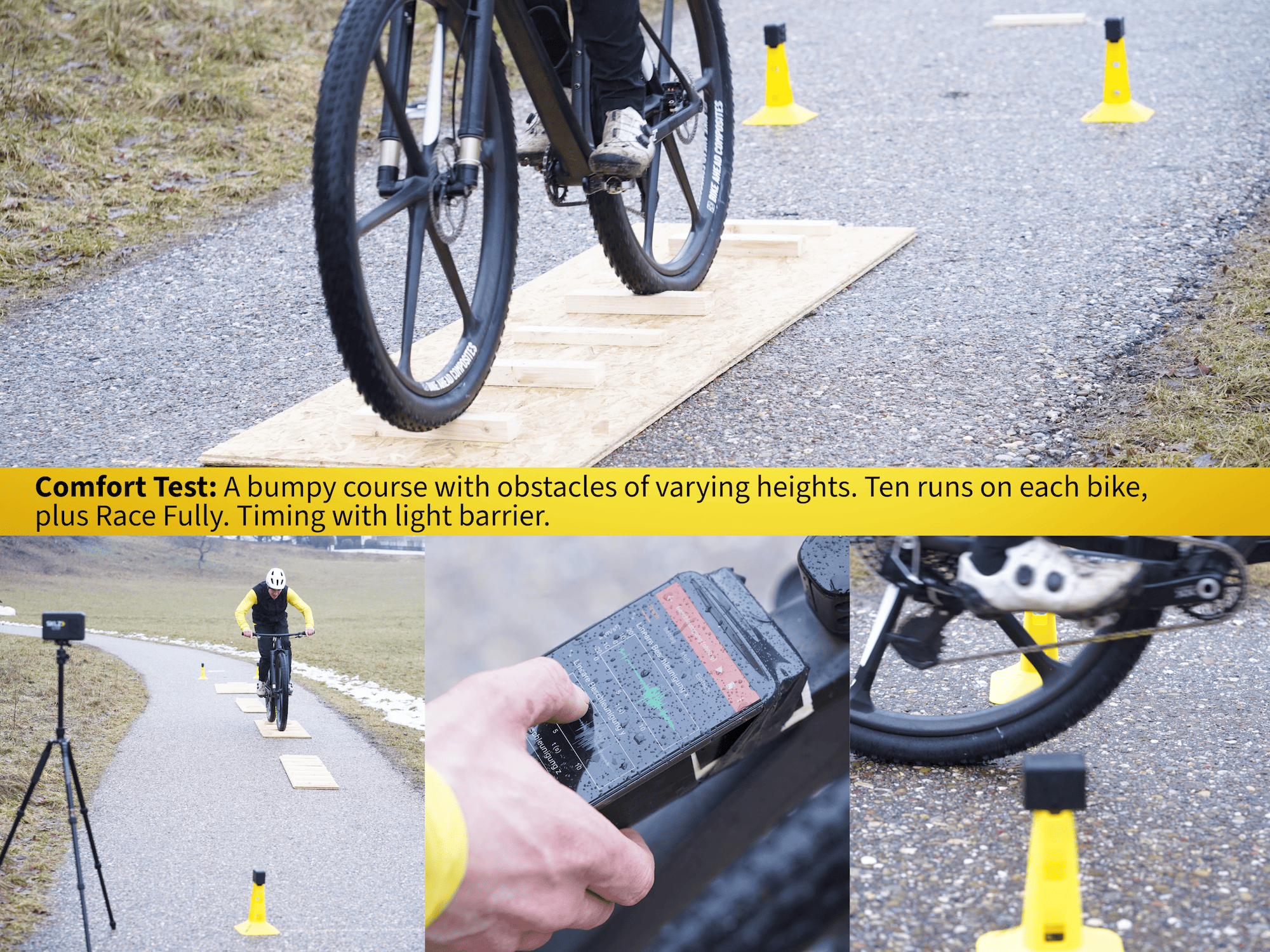
Rollover performance is important for speed and comfort. The test was conducted on a bumpy downhill course. The time was measured with a light barrier. Vibrations were registered with acceleration sensors. Each bike had to complete the course ten times. A race full-suspension bike also underwent the test for comparison. Here are the results.
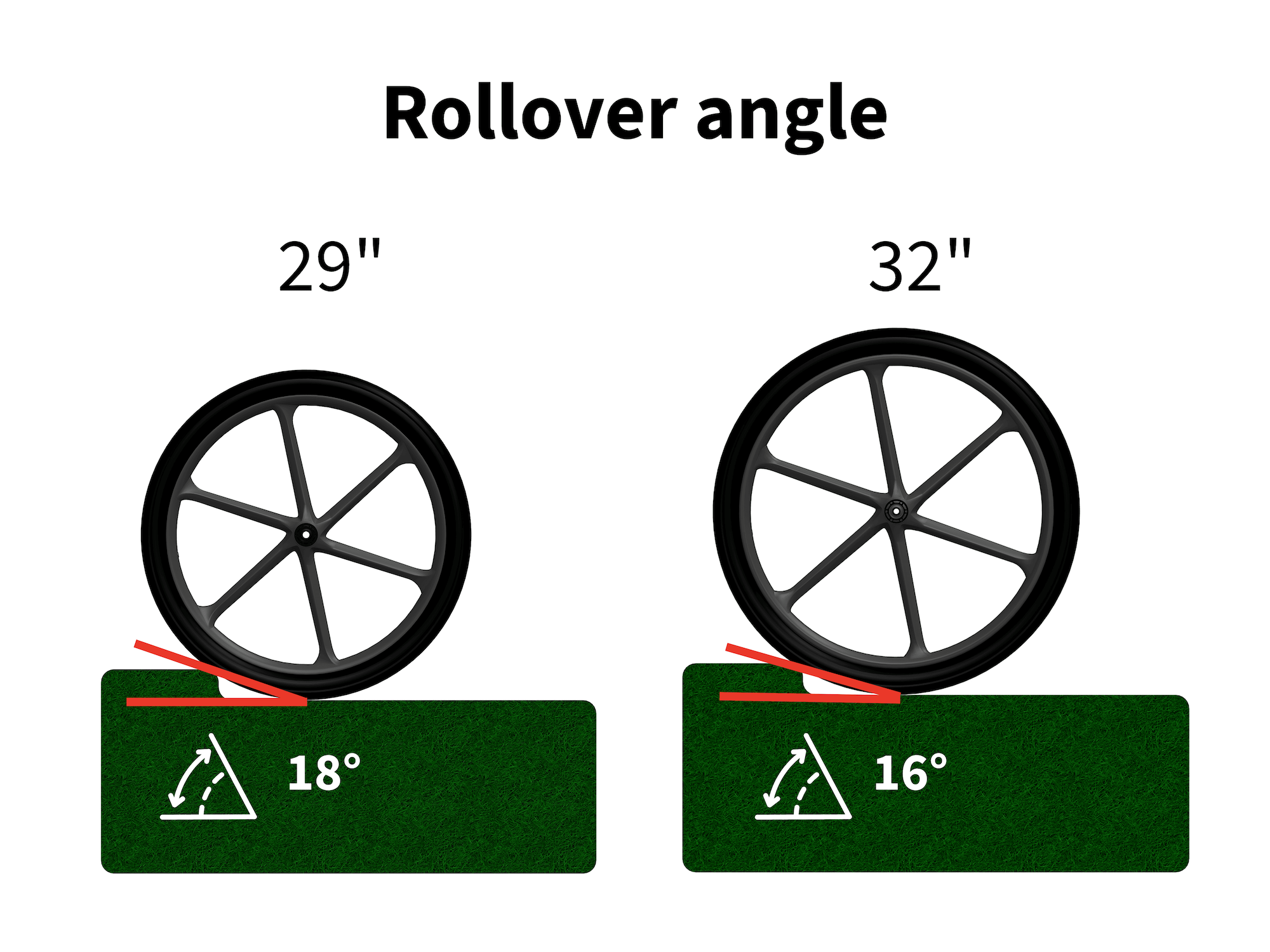
- The 32-inch wheel has a flatter rollover angle. The rider needs less force when riding over obstacles.
- On the standardized bump course, the hardtail with 32-inch wheels was 4 percent faster than with 29-inch wheels and 3 percent faster than the Race Fully.
- 32 inches is more comfortable than 29 inches.
- The analysis of the acceleration sensors shows 5 percent less vibration. This saves energy in technical sections.
- However, the 29-inch Race Fully wins the comfort rating. It filters out bumps best. It would be interesting to measure how comfortable a 32-inch Fully is.
- Conclusion: Speed and comfort are two different things.
Race track test
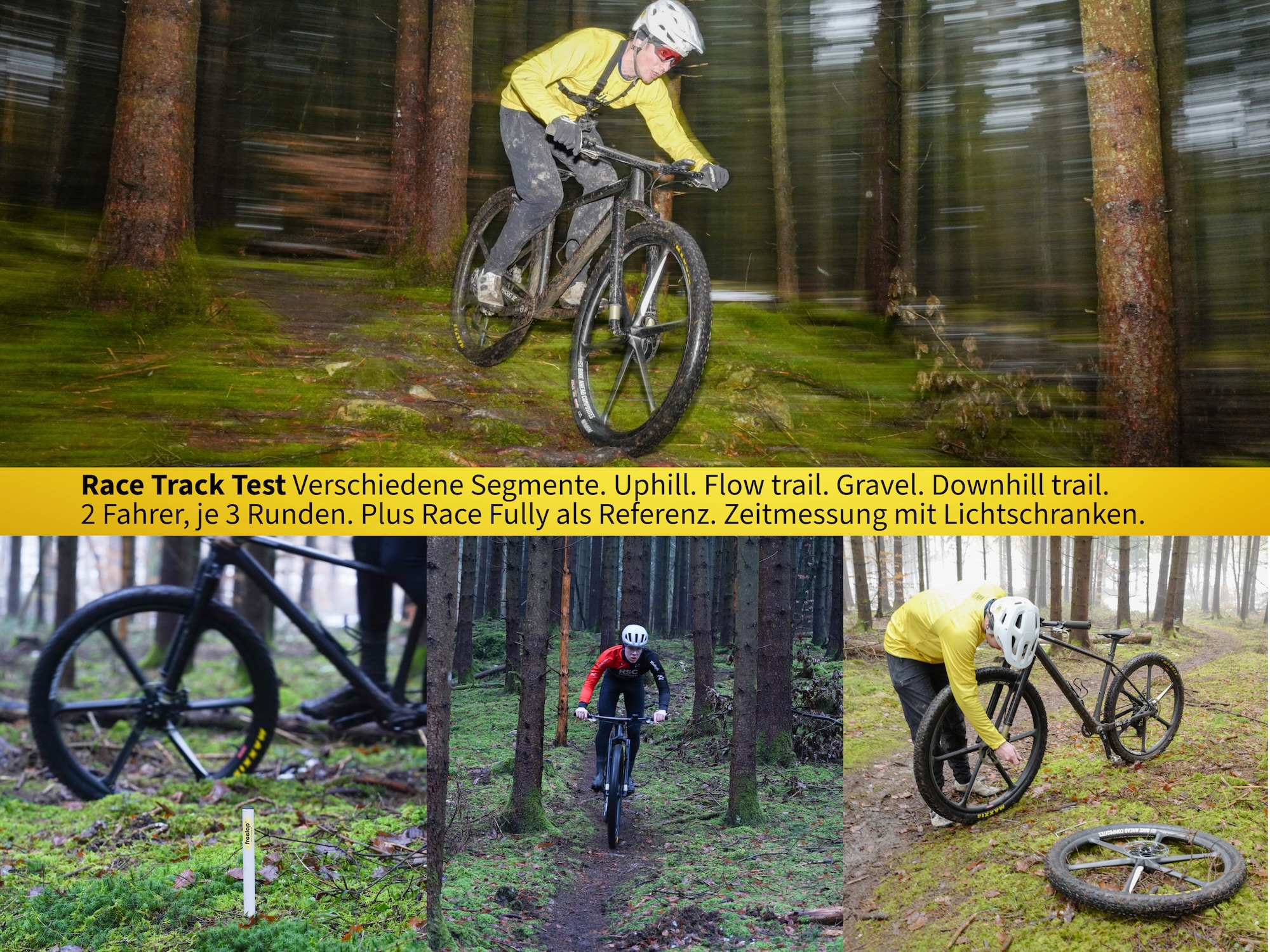
Theory is one thing. Practice is another. The course included all the elements of a typical cross-country track and was divided into different sections: uphill, flow trail, gravel section, curvy traverse, and technical downhill. Two riders completed three laps each on every bike. The watts were monitored with a power meter during the uphill sections and pedaling sections.
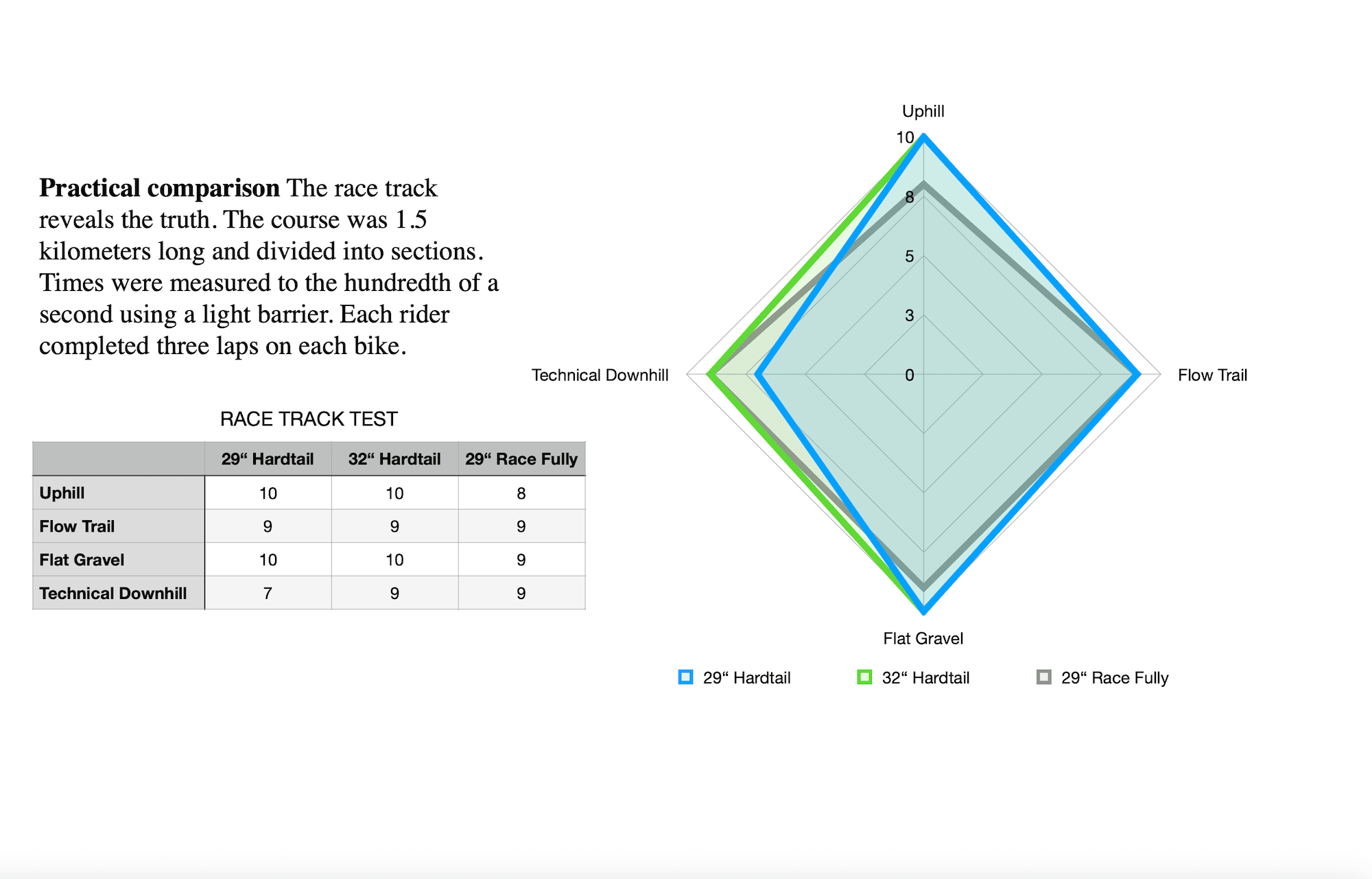
- Surprise on the uphill: the hardtail is just as fast with 32-inch wheels as it is with 29-inch wheels. The extra grip compensates for the disadvantages of 32-inch wheels in terms of acceleration.
- The 29-inch full-suspension bike, which weighs 2 kilograms, is significantly slower.
- In flow downhill, the 32-inch wheels only have a minimal advantage over 29-inch wheels.
- The advantage is greater on technical single trails with lots of roots. With 32-inch wheels, the hardtail is 3 percent faster than with 29-inch wheels.
- The 29-inch race full-suspension bike is about as fast as the 32-inch hardtail on technical DH trails.
- The 32-inch wheels have no measurable disadvantage in any of the five sections.
Conclusion
The advantage of 32-inch wheels in technical passages is measurable. On the race track, this can be decisive for the ranking. For touring cyclists, the difference is rather subtle.
You can find the full test with all the information, including a video, at Ride Better Bikes: www.bike-test.com



Interested in 32-inch bikes?
Click here to check out our brand-new BITURBO X 32 SAFEWING and our THE FRAME 32.